There’s a quiet pressure many of us carry — especially women, parents, helpers, and high-capacity humans.
The pressure to keep going.
To keep giving.
To stay productive.
To be patient, loving, responsive, organized, creative, and calm — all at once.
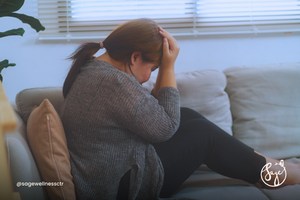
You wake up already thinking about who needs what from you. You move through your day checking boxes, responding to texts, holding space for others, managing the household, leading meetings, helping with homework. And by the time the house gets quiet, you’re depleted.
Yet somehow, a voice inside whispers: You should be able to handle this.
Let’s gently challenge that.
No one — no tree, no flower, no human nervous system — is designed to be in full bloom 24/7, 12 months out of the year. And that includes you.
If you’ve been feeling burned out, anxious, overstretched, or quietly resentful… this is your permission to pause.
Why Burnout Happens (Even to Strong, Capable People)
Many people who search for phrases like:
- “Why am I always tired even when I sleep?”
- “How do I stop feeling burned out?”
- “Is self-care selfish?”
- “Why do I feel anxious all the time?”
…are not weak.
They’re over-functioning.
When you are constantly “on,” your nervous system stays in a mild but chronic stress response. Even if nothing catastrophic is happening, your body doesn’t get the signal that it’s safe to rest.
Stress relief isn’t just about spa days or vacations. It’s about teaching your body and mind that you are allowed to slow down.
And here’s something important:
Everyone gets the same 24 hours in a day — but you get to choose how you spend them. That doesn’t mean life is always flexible. It means you have more agency than burnout wants you to believe.
The Oxygen Mask Principle: Self-Care Is Not Selfish
You’ve heard it on airplanes: Put your oxygen mask on first.
And yet in real life, so many of us do the opposite.
We prioritize:
- Everyone else’s needs
- Everyone else’s emotions
- Everyone else’s schedules
And then wonder why we feel empty.
Self-compassion is not indulgence. It’s sustainability.
If you are someone who tends to over-give, here’s a loving question to sit with:
What good are we to others if we are running on fumes?
Taking care of yourself first is not abandoning others. It is strengthening your capacity to show up with clarity, patience, and grounded presence.
Signs You May Be Living in Constant Bloom Mode
You might be stuck in “always on” mode if:
- You feel guilty when you rest
- You rarely check in with your own emotions
- You say yes automatically
- You feel depleted most days
- You fantasize about disappearing for a week just to be alone
These are not personality flaws. They are nervous system signals.
Your body is asking for stillness.
5 Practical Tools to Start Tending to Yourself Today
You don’t need a total life overhaul. Start small. Start now.
1. The 3-Minute Nervous System Reset (Body-Based Technique)
Place one hand on your chest and one on your belly.
Inhale slowly through your nose for 4 counts.
Exhale gently through your mouth for 6 counts.
Longer exhales signal safety to the nervous system and support anxiety relief.
Do this for three minutes. Notice what shifts.
2. Ask: “What Do I Need Right Now?”
This is awareness in action.
Not what your kids need.
Not what your partner needs.
Not what your inbox needs.
What do you need in this moment?
Water?
Fresh air?
Silence?
A boundary?
The practice of pausing builds emotional resilience over time.
3. Schedule Stillness Like It Matters (Because It Does)
If it’s not on the calendar, it often doesn’t happen.
Try blocking 15–30 minutes this week for:
- A walk in nature
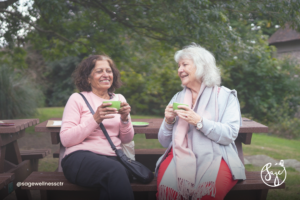
- Sitting quietly with tea
- Journaling
- Breathwork or meditation
For many of our clients here in Orange County, even stepping outside to feel the sun or walk near the coast becomes a powerful reset.
Stillness is not laziness. It is nervous system repair.
4. Practice a Gentle Boundary
Boundaries don’t have to be dramatic. They can sound like:
- “I need to check my schedule and get back to you.”
- “I can help, but not tonight.”
- “I’m not available for that.”
Guidance sometimes comes in the form of restraint — choosing not to overextend.
5. Redefine Productivity
What if tending to your mental health counted as productive?
What if rest counted?
What if therapy counted?
What if saying no counted?
Education around burnout shows that chronic stress reduces creativity, focus, and emotional regulation. Rest is not the opposite of productivity — it fuels it.
Whole-Person Healing: Mind, Body, and Spirit
At S.A.G.E. Holistic Health & Wellness Center, we see burnout as a whole-person issue.
When you are depleted:
- Your mind feels foggy or anxious
- Your body feels tense or exhausted
- Your spirit feels disconnected
True self-care integrates all three.
Mind: emotional awareness, therapy, self-compassion
Body: breathwork, movement, sleep, nourishment
Spirit: connection, purpose, stillness, reflection
Whether through therapy, Reiki, mindfulness practices, or guided support, healing becomes sustainable when you address the full system — not just the symptoms.
You don’t have to figure it out alone. Local support in Orange County can make this journey feel less isolating and more grounded.
You Are Allowed to Have Seasons
Nature does not bloom year-round.
There are seasons of growth.
Seasons of rest.
Seasons of shedding.
Seasons of quiet preparation.
If you have been expecting yourself to operate at peak output indefinitely, consider this your gentle permission to soften.
Self-care is not a trend.
Stress relief is not weakness.
Anxiety support is not failure.
It is wisdom.
You are allowed to choose how you spend your time. You are allowed to tend to yourself first. You are allowed to rest without earning it.
And when you do?
You don’t shrink.
You become sustainable.
If you’re feeling burned out, overwhelmed, or disconnected, therapy and holistic support can help you reconnect to your own rhythm. You deserve care too.
For now, take one slow breath.
Place your hand over your heart.
And remind yourself:
I am not meant to bloom all year long.