You love your family.
You care about your friends.
You want connection, belonging, shared meaning.
And yet… they’re often the very people who trigger you the most.
Maybe it’s tension with your spouse.
A sibling dynamic that hasn’t changed since childhood.
A church group that once felt like home but now feels complicated.
A friend group where you feel unseen.
It’s easy to land in a familiar thought loop:
“If they would just change, I’d feel better.”
But here’s the hard and hopeful truth: blaming others for our unhappiness rarely moves the needle. Not because your pain isn’t real. Not because dynamics aren’t messy. But because families, friend groups, and communities are systems — and inside that system, you are one of the parts.
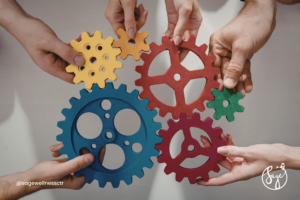
And when one part shifts, the entire system begins to respond.
“When one person in a system changes, the whole system begins to shift.” — Dr. Richard Schwartz
If you’ve ever Googled “why do family dynamics trigger me so much?” or “how do I stop blaming others for my unhappiness?” — you’re not alone. Many of the adults and parents we work with here in Orange County are asking the same question.
Let’s gently explore what’s really happening.
Understanding Family Systems and Why They Feel So Charged
Whether it’s your family of origin, your chosen family, or a tight-knit community, every group develops patterns:
- Roles (the peacemaker, the overachiever, the caretaker, etc.)
- Unspoken rules (don’t rock the boat, don’t be too emotional, “that” (fill-in-the-blank) is not welcome here, etc.
- Repeated reactions (shutdown, criticism, avoidance, blaming, etc.)
These patterns form a system of belonging and protection. They aren’t random. They evolved to help the group survive.
When you change — even slightly — the system feels it.
This is where Internal Family Systems (IFS) offers something profoundly helpful. IFS teaches that just as families are systems made of many people, you are also a system made of many inner parts — your inner child, your protector, your critic, your anxious part, your hopeful part.
And often, when a group triggers you, it’s not just “them.” It’s one of your parts reacting to an old wound.
Why Blame Feels So Tempting (and So Unhelpful)
Blame can feel relieving for a moment. It protects us from vulnerability.
If it’s their fault:
- I don’t have to feel rejected.
- I don’t have to examine my role.
- I don’t have to touch the deeper hurt.
But the nervous system doesn’t actually settle through blame. It settles through safety and understanding.
When we stay focused outward, our body often stays in:
- Fight (irritation, criticism)
- Flight (avoidance, withdrawal)
- Freeze (shutdown, numbness)
- Fawn (people pleasing, laughing it off)
The shift happens when we turn inward — not to shame ourselves, but to understand ourselves.
A Simple IFS-Inspired Practice: Turn Inward First
If you’re feeling triggered by someone in your life, try this short practice rooted in Stillness and Awareness.
1. Pause and Get Still (60–90 seconds)
Place one hand on your chest and one on your belly.
Take 5 slow breaths.
This regulates your nervous system and signals safety.
2. Ask: “What Part of Me Is Activated?”
Instead of:
“Why are they like this?”
Try:
“What part of me is hurting right now?”
Is it:
- A younger part that felt unseen?
- A protector part that doesn’t want to be criticized?
- A part that fears losing belonging?
No fixing. Just noticing.
3. Offer That Part Compassion
Silently say:
“Of course you feel this way.”
“It makes sense you’re reacting.”
This inner validation often softens the intensity.
4. Choose a Small Shift
From this calmer place, ask:
- Do I need a boundary?
- Do I need to communicate differently?
- Do I need to step away?
- Do I need support?
This is where real Guidance begins — not reactive, but grounded.
Small inward changes gain momentum in their ripple effect outward.
Whole-Person Healing: Mind, Body, and Spirit
This isn’t just mindset work. It’s whole-person work.
- Mind: Understanding family dynamics and internal parts reduces shame.
- Body: Regulating your nervous system prevents escalation.
- Spirit: Reconnecting with your deeper Self restores clarity and grounded compassion.
When you practice stillness and self-awareness, you’re not abandoning your relationships. You’re strengthening them at the root.
And sometimes, doing this work with a therapist who understands family systems and/or Internal Family Systems can accelerate insight and healing. Having a neutral space to explore family of origin wounds, belonging, and boundaries can be transformative — especially if you’re feeling stuck.
Here in Orange County, many individuals and parents are discovering that when they focus on their own healing, family relationships begin to feel less explosive and more manageable.
You Are a Part of the System — and You Have Power
You cannot control every member of your family.
You cannot force your friend group to evolve.
You cannot undo your childhood.
But you can:
- Tend to your inner world.
- Soothe your nervous system.
- Set clear, grounded boundaries.
- Show up differently.
And when you do, the system responds.
Sometimes subtly. Sometimes slowly. But it shifts.
Blame keeps you stuck.
Awareness creates movement.
Stillness creates clarity.
Compassion creates change.
If you’re feeling overwhelmed by family dynamics or longing for deeper belonging, you don’t have to navigate it alone. Therapy, holistic support, and intentional community can help you move from reactivity to rootedness.
For now, take one breath.
Place your hand on your heart.
And remember: change doesn’t begin out there.
It begins within.