You’re sitting in your car somewhere, engine off, keys still in your hand, and you can’t quite make yourself go inside yet. Nothing terrible happened. You’re just tired in a way sleep hasn’t touched in months. You take a breath, put your “I’m fine” face back on, and walk in anyway.
If that feels familiar, you’re not alone, and you’re not broken. You’re carrying more than most nervous systems were built to hold at once, in a culture that rarely gives us permission to stop and ask how we’re really doing.
That’s exactly why World Mental Health Day, observed every October 10, matters so much. This year’s global theme calls on all of us, especially workplaces, to finally prioritize mental health instead of treating it as an afterthought. But this isn’t just a workplace issue. It’s a whole-life issue. And it’s one worth pausing for, wherever you live and whatever your days look like.
What Chronic Stress Really Does to the Body and Mind
When people search “why am I so overwhelmed all the time” or “how to stop feeling burnt out,” they’re usually not looking for productivity hacks. They’re looking for permission to feel what they’ve been pushing down.
Chronic stress isn’t just a feeling, it’s a nervous system state. When your body stays in fight-or-flight too long without enough rest to balance it, you can end up with:
- Trouble sleeping, even when you’re exhausted
- A short fuse with people you love
- Feeling foggy, disconnected, or “not quite yourself”
- Physical tension, headaches, or a tight chest that no amount of stretching seems to fix
- A quiet sense of dread about the day ahead, even when nothing is technically “wrong”
None of this means something is broken in you. It means your nervous system has been working overtime, and it’s asking for a different kind of attention.
Coming Back to Stillness, Even for a Moment
One of the gentlest things you can offer yourself is stillness. Not a two-week retreat, just a few honest minutes where you’re not performing, producing, or fixing anything.
This is where nervous system regulation becomes so powerful. Your body can’t tell the difference between “deadline tomorrow” and “actual danger” unless you give it a clear signal that it’s safe to settle. One of the simplest ways to do that is through the breath.
A Simple Body-Based Practice to Try Today
Try this the next time you feel that familiar tightness rising:
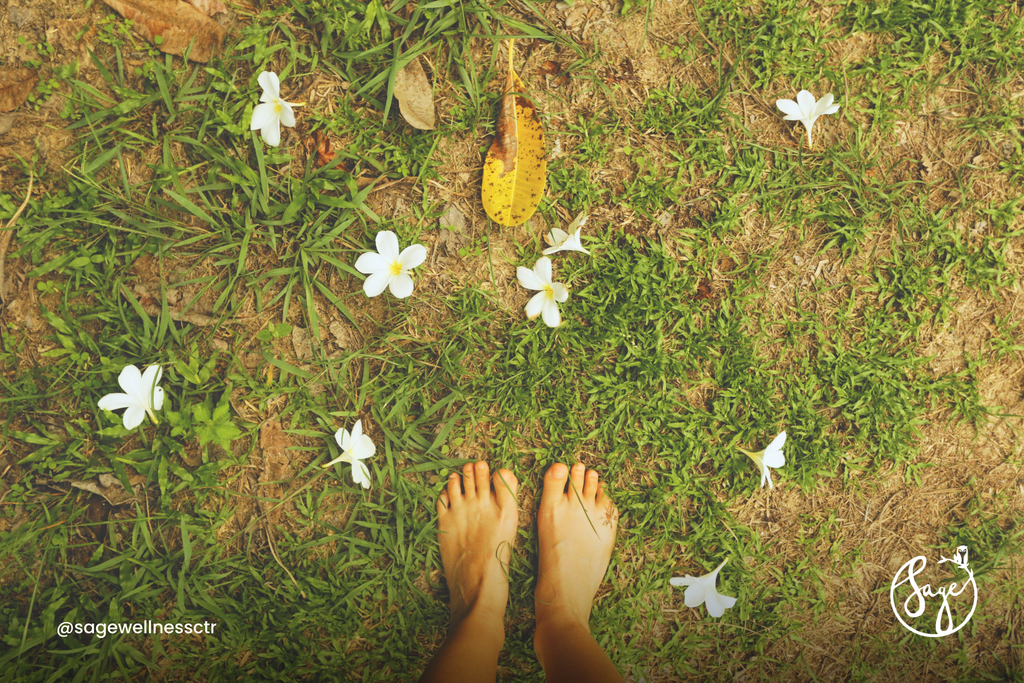
- Sit or stand with both feet flat on the ground, and notice the actual contact between your feet and the floor.
- Inhale slowly through your nose for a count of four.
- Hold gently for a count of four.
- Exhale slowly through your mouth for a count of six, letting the exhale be longer than the inhale.
- Repeat this for four to six rounds, letting your shoulders soften a little more each time.
This kind of extended exhale is a well-known way to gently activate your parasympathetic nervous system, the part of you responsible for rest, digestion, and calm. It won’t erase your stress, but it can remind your body that it’s allowed to soften, even briefly. And if you have followed along with another exercise like this through one of our S.A.G.E. reminders, we hope you’re using this as an actual anchor to do that work – because we all need it.
Awareness Before Action: Noticing What You’re Actually Feeling
So much of healing starts with simply noticing. Not analyzing, not fixing, just noticing.
Ask yourself gently: What am I actually feeling right now, underneath the busyness? Where do I feel it in my body? What have I been needing that I haven’t let myself ask for?
This kind of honest self-awareness is often the first real step before any tool, therapy, or holistic practice can do its deeper work. You can’t tend to what you haven’t let yourself see.
Whole-Person Healing: Mind, Body, and Spirit Together
Real, lasting wellness rarely comes from treating the mind, body, and spirit as separate problems to solve one at a time. Your racing thoughts, your tense shoulders, and your quiet sense of disconnection from meaning are often speaking to the same underlying need: to feel safe, seen, and whole again.
That’s why so many people find that a holistic approach, one that considers emotional patterns, nervous system health, physical wellbeing, and spiritual or meaning-based practices together, creates change that talk alone sometimes can’t reach.
A Few Practical Shifts to Try This Week
You don’t need to overhaul your life overnight. Small, consistent shifts tend to matter more than big, unsustainable ones.
- Protect one unscheduled pocket of time each day, even ten minutes, where nothing is required of you.
- Name what you’re feeling out loud or in writing, instead of letting it stay a vague background hum.
- Move your body gently, a walk, some stretching, anything that helps discharge stress rather than just think your way through it.
- Notice your “yes” reflex. Before agreeing to one more thing, pause and ask if it’s aligned with what you actually have capacity for.
- Let rest be productive. Reframe stillness not as laziness, but as maintenance for the nervous system that carries you through everything else.
When It’s Time for Guidance and Support
Some seasons call for more than self-help tools, and that’s not a failure, it’s wisdom. Working with a therapist or a holistic practitioner can offer guidance that’s genuinely tailored to you, rather than generic advice pulled from the internet. Whether that’s talk therapy, somatic work, mindfulness-based support, or community care, if you’re in Orange County or nearby, local support is often closer than it feels, and reaching for it is one of the most self-respecting things you can do.
A Gentle Reminder to Take With You
You don’t have to earn rest by falling apart first. You don’t have to prove your struggle before you’re allowed to ask for help. This World Mental Health Day, consider it a quiet invitation, not to fix yourself, but to come home to yourself, one honest breath at a time.
Wherever you are right now, you’re allowed to slow down long enough to hear what you actually need.
If you’re ready for a little support along the way, S.A.G.E. is here. You don’t have to navigate your healing journey alone. Explore our holistic wellness services and connect with a member of our team to find a place to begin.